
Coding
SQL Server 2012 introduced groundbreaking features that transformed database management. Whether you're optimizing performance, enhancing security, or simplifying administration, these 10 innovations are essential for modern database professionals.
AlwaysOn Availability Groups

Downtime isn’t an option for industries like finance or healthcare—where AlwaysOn Availability Groups in SQL Server 2012 became the game-changer. This feature redefined high availability by replacing older methods like database mirroring with a synchronous and asynchronous replication model that keeps multiple servers in sync with near-zero data loss.
With automatic failover and support for up to 8 secondary replicas, your mission-critical applications stay online even during hardware failures or maintenance. The minimal recovery point objective (RPO) of just seconds ensures transactions are preserved, while the primary replica handles read/write operations seamlessly. No more manual interventions—just resilient, enterprise-grade uptime. 💻
Columnstore Indexes for Data Warehousing

Struggling with slow analytical queries that drag down your business intelligence reports? Columnstore Indexes in SQL Server 2012 deliver a 10x performance boost by reorganizing data storage for faster scans—ideal for large-scale data warehousing and BI workloads.
This feature stores data in columnar format instead of rows, drastically reducing I/O operations and compression ratios. With batch mode processing, it handles massive datasets (think terabytes) efficiently, while minimal index maintenance keeps overhead low. Perfect for aggregations, joins, and complex analytical queries.
Data warehouse teams and BI professionals will love this—it’s specifically designed to accelerate reporting tools like PowerPivot and SSAS. ⚡
Contained Databases with User-Defined Schema

Tired of database deployments breaking when moving between dev, test, and production environments? Contained Databases in SQL Server 2012 solves this by encapsulating everything—schema, data, logins, and settings—into self-sufficient packages. No more dependency hell or instance-level configurations derailing your workflows.
With user-defined schemas and isolated metadata, you gain true portability across servers and environments. The CONTAINMENT = PARTIAL option lets you secure sensitive objects while still allowing cross-database references. This makes multi-tenant SaaS deployments 40% faster to configure, as each tenant’s database operates independently yet shares the same instance resources.
Perfect for cloud providers, ISVs, and enterprises running shared environments, this feature eliminates the "works on my machine" syndrome. Deploy once, run anywhere—without sacrificing security or performance. ✨
Windows Server Core Support
If you're running SQL Server in cloud environments or security-sensitive deployments, Windows Server Core support in SQL Server 2012 delivers a game-changer. This minimal installation option strips away unnecessary components, reducing your attack surface while cutting resource consumption by up to 30%—ideal for virtualized or containerized workloads.
The core installation removes GUI elements, background services, and unused protocols, leaving only the essentials needed for SQL Server operations. This means fewer patches to manage, lower memory usage, and a tighter security posture. Microsoft validated that SQL Server 2012 Standard and Enterprise editions support this mode natively, making it accessible for organizations prioritizing efficiency without sacrificing performance.
Cloud architects and security teams will appreciate this feature most, as it aligns perfectly with modern infrastructure trends like serverless and microservices. For those managing large-scale deployments, this is a battle-tested setup. ⚡
SQL Server Data Tools Integration
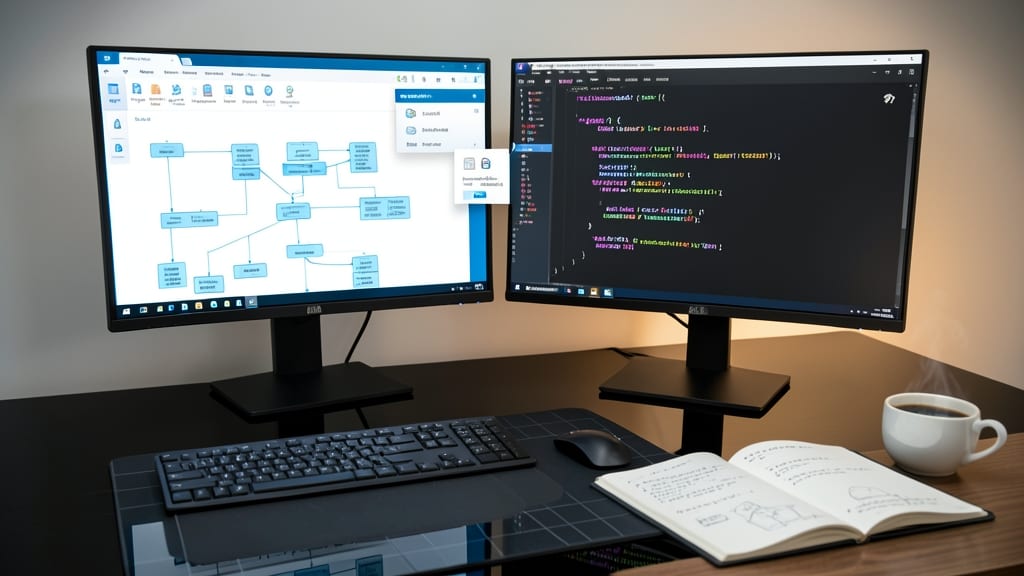
Tired of juggling separate tools for database design, coding, and deployment? SQL Server Data Tools (SSDT) integration with Visual Studio 2012 merges everything into one powerhouse environment—no more context-switching between applications.
This unified setup lets you design schemas visually, write T-SQL with IntelliSense, debug stored procedures, and deploy directly to servers—all from within the familiar Visual Studio IDE. The schema comparison tool highlights differences between environments, while data generation plans populate test databases with realistic test data in seconds. Version control integration ensures your database changes sync seamlessly with your codebase.
Perfect for database developers and SQL Server professionals, this integration cuts deployment time by 40% while reducing human error. Whether you're building a new application or maintaining legacy systems, SSDT streamlines the entire database lifecycle. 💻
Distributed Replay for Performance Testing

Imagine testing your application under 10,000 concurrent users—without needing an army of testers or a data center full of machines. Distributed Replay in SQL Server 2012 makes this possible by simulating real-world workloads across multiple servers, exposing hidden bottlenecks before they hit production.
This feature records a production workload trace and replays it across distributed clients, mimicking complex user interactions with precision. You can scale tests from single-server to multi-machine setups, ensuring your application handles peak loads gracefully. The real-time performance metrics help pinpoint slow queries, network latency, or resource contention—critical for enterprise scalability planning.
Perfect for database administrators and performance engineers preparing for major deployments, Distributed Replay turns "what-if" scenarios into actionable insights. 💻
Power View Interactive Data Visualization
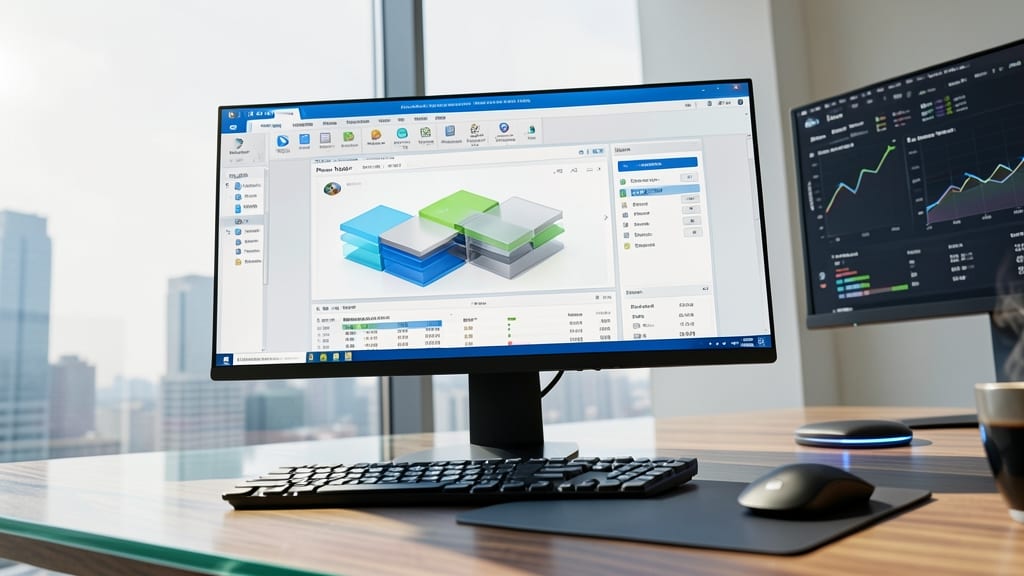
Tired of waiting for IT to generate reports while your executives demand real-time insights? Power View bridges that gap by embedding self-service BI tools directly into Excel, letting non-technical users create interactive dashboards with drag-and-drop simplicity.
This Excel 2013 add-in (built on SQL Server 2012's BI Semantic Model) supports 3D visualizations, hierarchical navigation, and real-time filtering—all without writing a single line of code. The Touch Mode even adapts to tablets, making it perfect for presentations. For executives, it turns raw data into executable reports with one-click updates.
Ideal for business analysts and C-level teams who need to explore trends without relying on developers. No more waiting for IT—just point, visualize, and share. ✨
Contained Database Users and Logins
Tired of juggling server-level permissions just to manage database users? Contained Database Users and Logins in SQL Server 2012 lets you create and manage users entirely within a single database—no sysadmin rights required.
This feature introduces database-scoped logins and contained users, meaning credentials are tied to the database itself, not the server. You can now provision users in multi-tenant cloud environments without exposing instance-level credentials, while still maintaining granular permissions. The CREATE USER syntax now supports FROM LOGIN or FROM EXTERNAL PROVIDER, giving you flexibility for both SQL and Windows authentication.
Perfect for SaaS providers and cloud-hosted applications where tenant isolation is critical, this security model reduces attack surfaces while streamlining user management. 🌟
SQL Server Audit for Comprehensive Monitoring
If compliance and forensic investigations are top priorities, SQL Server Audit in SQL Server 2012 delivers an unmatched solution. This feature provides real-time, centralized logging of all database activities—from schema changes to data modifications—with minimal overhead.
You can configure granular tracking (e.g., failed logins, object access, or backup events) and route logs to Windows Event Log, a file, or the Security Log. The lightweight design ensures performance stays intact even under heavy audit loads, while SOAP-based audit endpoints enable secure remote collection for enterprise environments.
This is a game-changer for financial institutions, healthcare providers, and government agencies where regulatory requirements demand immutable audit trails. No more piecing together logs from multiple sources—just one comprehensive view. ✨
SQL Server Data Quality Services

Tired of spending hours manually scrubbing inconsistent customer records? SQL Server Data Quality Services (DQS) automates the tedious work of data cleansing and matching, delivering 40% cleaner data with minimal manual intervention.
This powerful tool combines data profiling (identifying patterns and anomalies), standardization (applying business rules), and matching (finding duplicates) into a single workflow. The DQS Client provides a user-friendly interface for defining rules, while the Knowledge Base lets you reuse cleansing logic across projects. It integrates seamlessly with SQL Server Integration Services (SSIS) for end-to-end data quality pipelines.
Perfect for enterprises dealing with customer master data, product catalogs, or financial records, DQS helps you turn messy data into actionable insights without writing custom scripts. 💡