
Software
Navigating Microsoft SQL Server Management Studio (SSMS) versions can be confusing with frequent updates. This guide breaks down 10 key SSMS releases, comparing their features, compatibility, and ideal use cases to help you choose the right version for your database management needs.
SQL Server Management Studio 18.0 for SQL Server 2017
If your team still supports SQL Server 2008 but needs modern development tools, SSMS 18.0 bridges the gap perfectly. This version is the latest stable release with full backward compatibility, letting you manage legacy databases while leveraging newer features like improved query performance and enhanced security.
The 18.0 release introduces dark theme support for reduced eye strain, IntelliSense improvements for faster coding, and better integration with Azure SQL Database. It’s lightweight yet powerful, supporting everything from SQL Server 2008 to 2017 without requiring separate installations. For enterprises stuck in legacy environments, this is the safest upgrade path.
Database administrators and developers maintaining mixed environments will appreciate how SSMS 18.0 simplifies cross-version management. Its stability and compatibility make it a battle-tested setup. ⚡
SQL Server Management Studio 17.9 for SQL Server 2016

If your organization still relies on SQL Server 2016 but needs modern JSON handling and enterprise-grade security, SSMS 17.9 delivers exactly that. Unlike newer versions focused on broader compatibility, this release zeroes in on SQL Server 2016 environments with targeted enhancements that address real-world pain points.
The standout features include improved JSON query support—finally making it easier to work with nested JSON data without clunky workarounds—and enhanced Always Encrypted functionality, which lets you encrypt sensitive columns at rest and in transit with minimal performance overhead. For security-conscious DBAs, the Always Encrypted improvements in this version are a game-changer, offering granular control over encryption keys while maintaining compatibility with existing applications.
This version is ideal for database administrators managing SQL Server 2016 in regulated industries (like finance or healthcare) where data protection is non-negotiable. If you're stuck on SQL Server 2016 but need to modernize your JSON workflows or tighten security, SSMS 17.9 is your best bet. ✨
SQL Server Management Studio 17.8 for SQL Server 2014
If your organization still relies on SQL Server 2014, SSMS 17.8 is your bridge to modern performance tuning without a full upgrade. This version introduces refined extended events capabilities and deeper query optimization tools, helping you squeeze every bit of efficiency from older hardware.
Key improvements include enhanced live query statistics for real-time monitoring and a revamped performance dashboard that visualizes bottlenecks clearly. The query store integration (even in legacy mode) lets you track historical performance trends—critical for databases stuck on SQL Server 2014. Plus, it’s the last SSMS version to support this older edition before Microsoft’s end-of-life policies kick in. ⚡
Database administrators at small businesses or legacy-heavy enterprises will find this version indispensable for maintaining stability while planning migrations. It’s the last chance to modernize management tools before SQL Server 2014’s full sunset.
SQL Server Management Studio 17.4 for SQL Server 2012
If you're still running SQL Server 2012 but need modern management tools, SSMS 17.4 is your bridge to efficiency. Unlike earlier versions, it introduces PowerShell scripting integration, letting you automate tasks directly from the interface—no third-party tools required.
The data-tier application deployment improvements streamline database project management, while support for Windows PowerShell 5.1 ensures compatibility with modern scripting workflows. This version also fixes critical bugs in earlier releases, making it the safest choice for SQL Server 2012 SP3 environments.
Perfect for IT admins managing legacy systems or developers maintaining older applications, SSMS 17.4 extends the lifespan of SQL Server 2012 without forcing a full upgrade. 💻
SQL Server Management Studio 17.3 for SQL Server 2008 R2

Still running SQL Server 2008 R2 in production? SSMS 17.3 is your lifeline—designed specifically to keep legacy systems humming without forcing a full upgrade. This version bridges the gap between outdated hardware and modern database needs, especially for environments stuck on Windows Server 2008 R2 or older.
You’ll find enhanced Reporting Services tools for building complex reports without workarounds, plus deep compatibility with 2008 R2’s stored procedures and triggers. The lightweight installer avoids bloating older machines, while support for 32-bit and 64-bit architectures ensures flexibility. Even Microsoft’s own documentation highlights this as the go-to for maintaining 2008 R2 environments until migration.
Perfect for small businesses, government agencies, or legacy enterprise systems where upgrading isn’t an option yet. If you’re still on Windows Server 2008 R2, this is the version that keeps your workflows running smoothly. ✨
SQL Server Management Studio 16.5 for SQL Server 2016 SP1
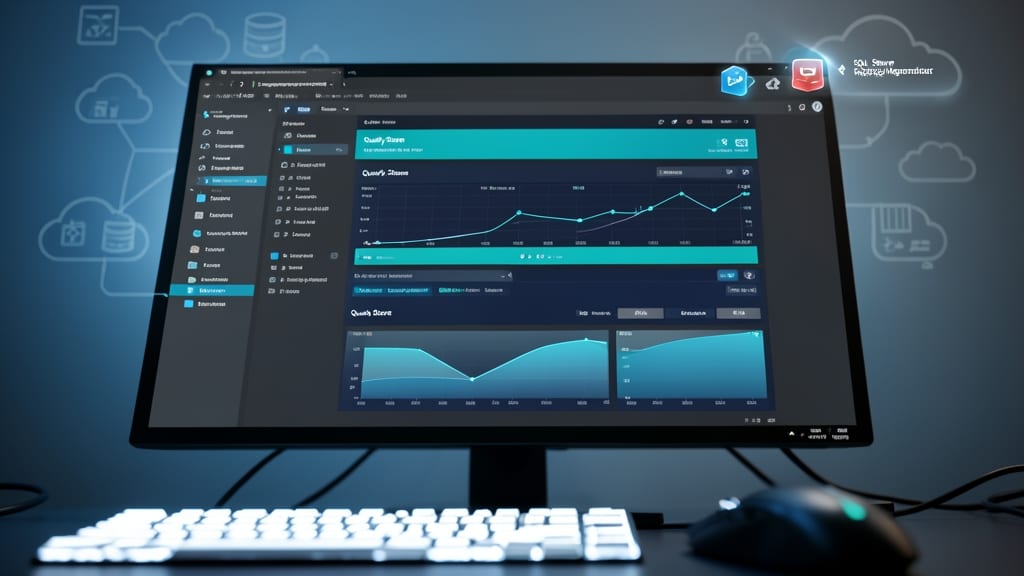
If you're managing SQL Server 2016 SP1 deployments and need seamless hybrid cloud connectivity, SSMS 16.5 is your go-to tool. This version bridges on-premises databases with Azure SQL Database while introducing refined query store capabilities for performance tuning.
The query store improvements let you track query performance trends over time, helping you identify regressions or bottlenecks without manual tuning. Meanwhile, the enhanced Azure integration simplifies cross-platform management—connecting to Azure SQL databases directly from the same interface you use for local instances. It also includes Windows 10 Creators Update compatibility, ensuring smooth operation on modern systems.
Perfect for hybrid cloud administrators or teams migrating workloads between on-premises and Azure, SSMS 16.5 eliminates the guesswork in performance monitoring while keeping your workflows consistent. ✨
SQL Server Management Studio 16.0 for SQL Server 2014 SP2
If you're a developer juggling multiple projects with limited system resources, SQL Server Management Studio 16.0 for SQL Server 2014 SP2 might be your best bet. This was Microsoft’s first standalone SSMS release, breaking free from the SQL Server installation bundle to offer a leaner, more flexible tool.
The biggest win here is the lightweight installation (under 1GB), making it ideal for laptops or VMs where space is tight. It also introduced enhanced IntelliSense for T-SQL, reducing syntax errors during development. The minimal footprint means you can install it alongside other tools without bloating your system, while still getting core database management features like query execution plans and table design.
Perfect for individual developers or small teams working with SQL Server 2014 SP2, this version strikes a balance between functionality and efficiency—no bloat, just the tools you need to get the job done. ✨
SQL Server Management Studio 13.0 for SQL Server 2012 SP1

If you’re running SQL Server 2012 SP1 and need a reliable tool without upgrading, SSMS 13.0 is your gateway to the modern SSMS experience. This was the first version to replace the outdated SQL Server Management Studio 2008 R2 with a sleek, intuitive interface that became the foundation for all future releases.
The query design tools got a major upgrade, including a revamped table designer with visual foreign key relationships and improved IntelliSense for faster SQL writing. It also introduced SQL Server Data Tools (SSDT) integration, letting you manage database projects more efficiently—something missing in older versions.
Perfect for legacy system administrators or developers stuck on SQL Server 2012 SP1, this version bridges the gap between outdated tools and modern workflows without requiring a full upgrade. ✨
SQL Server Management Studio 12.0 for SQL Server 2014 CTP

Want to get ahead of the curve with SQL Server 2014 before it even launched? SQL Server Management Studio 12.0 for SQL Server 2014 CTP was your gateway to testing groundbreaking features like in-memory OLTP and buffer pool extensions—long before they became staples in production environments.
This Community Technology Preview (CTP) version included early access to SQL Server 2014’s most innovative capabilities, such as enhanced AlwaysOn availability groups and improved query store functionality. It was designed exclusively for developers and testers who needed to experiment with new syntax, performance optimizations, and management tools in a sandboxed environment. The interface mirrored the final product but carried a clear preview warning to remind users of its experimental nature.
If you were a developer or DBA eager to shape the future of SQL Server 2014, this was the version to install on Windows 8.1 or Windows Server 2012 R2 test machines. It’s now obsolete, but its legacy lives on in the features it helped refine. ✨
SQL Server Management Studio 11.0 for SQL Server 2012

If you're tracing the lineage of SQL Server Management Studio, SSMS 11.0 for SQL Server 2012 marks the pivotal moment when modern database management tools began taking shape. This version wasn't just an incremental update—it introduced AlwaysOn availability groups, a game-changer for high-availability setups, and laid the foundation for future SSMS features.
The graphical execution plans and enhanced query store (in preview) made complex performance tuning more intuitive. It also standardized the Object Explorer layout we still recognize today, replacing the fragmented tools of earlier versions. For developers, the T-SQL debugging improvements and schema comparison tools streamlined workflows significantly.
This version is a must-study for database architects and educators tracing SSMS evolution. Its features became the baseline for later versions, making it the perfect reference for understanding how modern SSMS capabilities were born. ✨