
Software
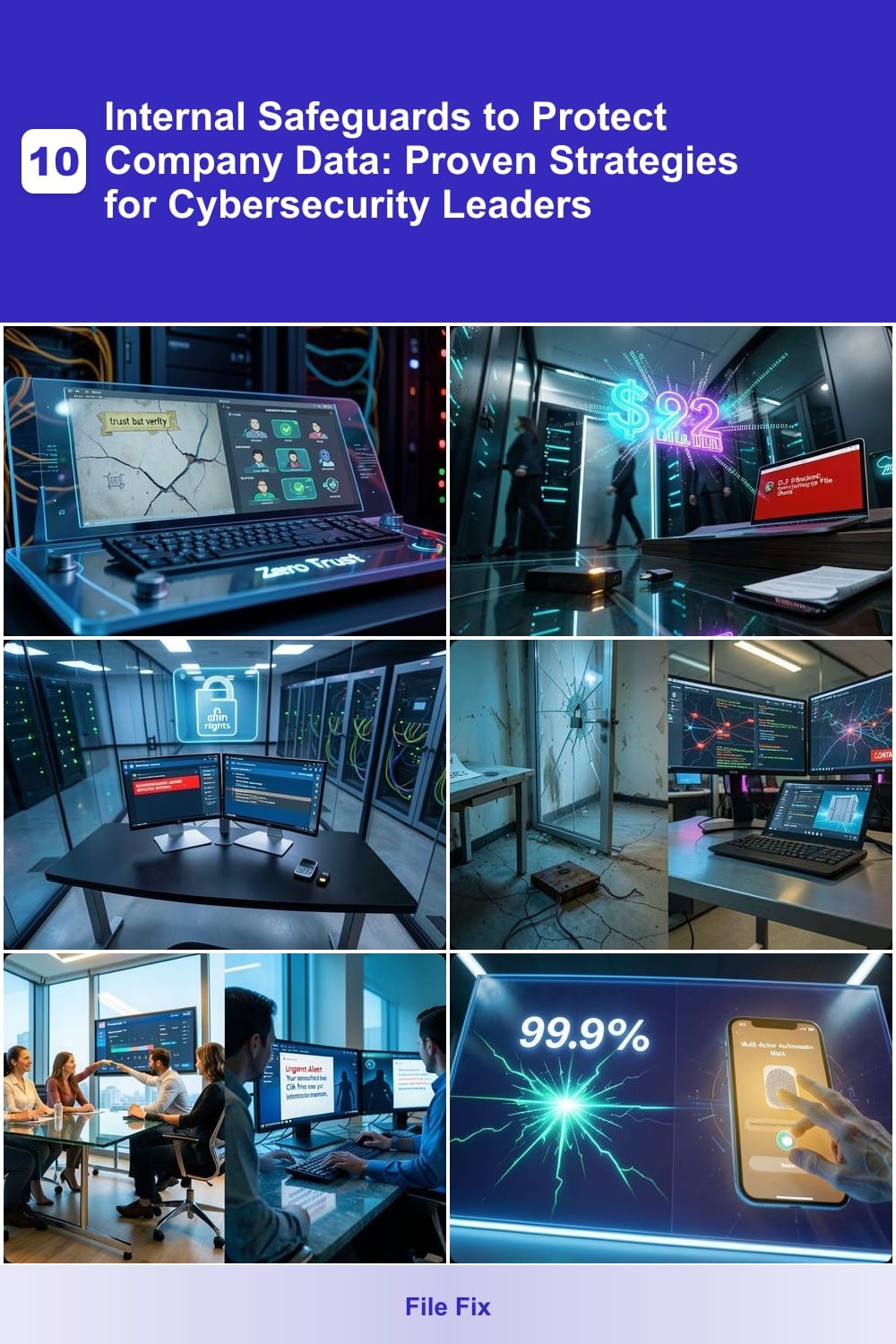
Data breaches cost companies billions annually—but most attacks start with internal vulnerabilities. These ten proven safeguards help cybersecurity leaders fortify their defenses before threats escalate, blending technical controls with human-centric policies.
Zero Trust Network Access Implementation Guide

Tired of relying on outdated "trust but verify" models that leave your network vulnerable? Zero Trust Network Access (ZTNA) flips the script by demanding verification for every connection—no exceptions. Unlike traditional VPNs, ZTNA grants access only after authenticating users and devices, slashing lateral movement risks by up to 80% during breaches.
This approach leverages continuous authentication (no static credentials) and micro-segmentation to isolate critical assets. Solutions like Zscaler Private Access or Cisco Duo integrate seamlessly with hybrid cloud setups, while BeyondTrust specializes in just-in-time access for third-party vendors. The result? No implicit trust—just real-time validation at every step.
Perfect for hybrid cloud environments or teams with frequent contractor access, ZTNA turns "never trust, always verify" into a battle-tested setup. ⚡
Automated Data Loss Prevention Policies

Accidental data leaks cost businesses an average of $3.92 million per breach—and most start with an employee unknowingly sharing sensitive files. Automated Data Loss Prevention (DLP) policies act as an invisible bouncer, scanning emails, cloud uploads, and even USB transfers in real-time to block leaks before they happen.
Modern DLP solutions like Forcepoint or Symantec DLP use AI-driven pattern recognition to flag PII (Personally Identifiable Information) such as Social Security numbers, credit card details, or proprietary documents marked as confidential. They integrate with Microsoft 365, Salesforce, and Dropbox to enforce policies like "no external email attachments" or "auto-encrypt sensitive files." Some even provide customizable alerts for policy violations, letting your team investigate without manual file reviews.
This safeguard is a must-have for healthcare (HIPAA compliance), finance (PCI DSS), or any company handling trade secrets. With zero-config templates for common industries, you can deploy DLP faster than patching a critical vulnerability. 💪
Privileged Access Management Framework

What if one rogue admin account could expose years of proprietary research—or wipe out customer trust in minutes? A Privileged Access Management (PAM) framework stops that by locking down admin rights until they’re actively needed, then revoking them immediately after.
Unlike static role-based access controls, PAM uses just-in-time (JIT) approvals to grant temporary elevated permissions—only for the exact task, for the shortest time possible. Solutions like CyberArk or BeyondTrust integrate with your existing identity providers and log every privileged session for audits. The result? A 90% reduction in unnecessary admin access while maintaining compliance with frameworks like NIST SP 800-44 or ISO 27001.
This is non-negotiable for financial institutions handling high-value transactions or pharma/tech firms protecting trade secrets. Even small teams benefit from the automated session recordings that catch accidental data leaks before they happen. 💻
Endpoint Detection and Response Systems

Traditional antivirus tools are like setting a burglar alarm after the thief has already broken in—Endpoint Detection and Response (EDR) systems change that game entirely. They actively monitor devices for suspicious behavior patterns, like unusual process injections or lateral movement, and stop threats before they execute, even if they bypass signature-based defenses.
Modern EDR solutions like CrowdStrike Falcon or Microsoft Defender for Endpoint combine real-time monitoring with AI-driven threat hunting and automated containment. They integrate seamlessly with your existing security stack, providing detailed forensic reports to help IT teams understand how an attack occurred. The best part? They work across Windows, macOS, Linux, and even mobile devices, making them ideal for remote teams using personal laptops or BYOD policies.
This is the safeguard for organizations where employees work across multiple devices and locations—think creative agencies, healthcare providers, or distributed engineering teams. By catching threats at the endpoint, you reduce the attack surface before malware ever reaches your network. 🌟
Employee Security Awareness Training Programs

Your employees might be your best defense—or your biggest vulnerability. Employee Security Awareness Training Programs transform human risk into a strategic advantage by blending real-world phishing simulations with engaging, game-like learning.
Platforms like KnowBe4 or SANS Security Awareness deliver customizable phishing tests that mimic real attacks, while gamified modules (think leaderboards and rewards) boost engagement. Studies show these programs can reduce credential theft attempts by up to 70%—far outpacing traditional compliance training. The best solutions also include automated reporting to track progress and identify weak spots in your team’s defenses.
This safeguard is non-negotiable for any organization where employees handle sensitive data, from healthcare providers to finance teams. Even small businesses benefit—zero upfront hardware costs and scalable cloud options make it accessible for all. 💡
Multi-Factor Authentication Enforcement

Credential stuffing and brute-force attacks account for 99.9% of automated login attempts—but Multi-Factor Authentication (MFA) enforcement stops them dead in their tracks. Unlike reactive solutions, MFA adds a second verification layer (like a push notification or biometric scan) to every login, creating an impenetrable barrier for attackers.
Modern MFA solutions like Microsoft Authenticator or Duo Security integrate seamlessly with Active Directory and cloud apps, supporting FIDO2 keys, SMS backups, and risk-based conditional access. The best platforms also offer zero-trust integration, automatically blocking suspicious logins from new devices or locations without manual intervention.
This isn’t just a best practice—it’s a compliance requirement for industries like healthcare (HIPAA) and finance (PCI DSS). For organizations handling sensitive data, enforcing MFA across all accounts (including admin and third-party access) isn’t optional—it’s the first line of defense against credential-based breaches. ✨
Secure File Sharing and Collaboration Tools

Tired of accidentally emailing confidential files to the wrong person? Secure file-sharing tools like Citrix ShareFile or Box Shield create encrypted portals that self-destruct after a set time—no more lingering risks. These platforms replace risky attachments with audit trails that track every download, ensuring compliance with regulations like GDPR or HIPAA.
Key features include end-to-end encryption, password-protected links, and expiration dates for shared files. Legal teams can restrict access to specific IP ranges, while R&D groups can enforce view-only permissions for prototypes. The best solutions integrate with your existing SSO providers (like Okta or Azure AD) for seamless adoption.
Perfect for industries where data leaks mean reputational damage—think biotech research, law firms, or financial auditors. These tools turn collaboration into a secure, traceable process without sacrificing productivity. ✨
Incident Response Playbooks for Data Breaches
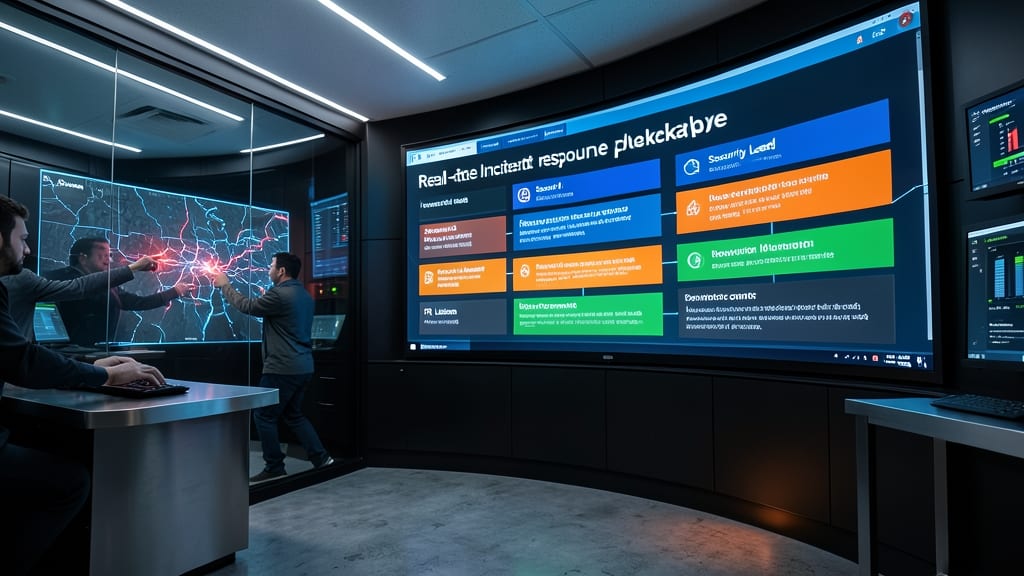
When seconds count during a breach, incident response playbooks turn chaos into structured action—pre-defining containment, eradication, and recovery steps to slash downtime by up to 60%. Unlike reactive measures, these playbooks map out roles, tools, and communication protocols before an attack hits, ensuring your team responds with precision.
Look for playbooks with modular templates (e.g., for ransomware vs. credential theft) and automated escalation workflows that integrate with your SIEM or ticketing systems. The best include pre-written stakeholder notifications—aligned with GDPR, HIPAA, or CCPA—to avoid legal missteps while regulators scrutinize. Tools like Splunk Phantom or IBM Resilient offer customizable frameworks, but even a simple SharePoint-based playbook beats no plan at all.
These are non-negotiable for compliance-heavy industries (healthcare, finance) or any org handling sensitive IP, but even SMBs benefit from tailored playbooks. Start with a tabletop exercise—because the best playbooks get tested, not just stored. ✨
Regular Third-Party Risk Assessments

Your supply chain could be the weakest link in your security strategy—even if your internal defenses are airtight. Regular third-party risk assessments uncover vulnerabilities in vendors and partners before they become contractually locked in, acting as a preemptive strike against supply-chain attacks like SolarWinds.
These assessments typically include automated compliance scans (e.g., NIST CSF or ISO 27001), penetration testing of partner systems, and contractual security clause reviews. Tools like SecurityScorecard or BitSight automate vendor scoring, while frameworks like NIST SP 800-161 provide structured evaluation criteria. Schedule assessments quarterly for high-risk vendors or annually for standard partners.
This safeguard is non-negotiable for organizations relying on cloud providers, SaaS platforms, or outsourced IT services. Even small businesses with third-party payment processors should adopt simplified risk assessments to meet compliance requirements like PCI DSS or GDPR. 💪
Continuous Vulnerability Scanning and Patching

For IT teams drowning in legacy systems and mixed environments, continuous vulnerability scanning isn’t just helpful—it’s a lifeline. Tools like Tenable.io or Qualys VMDR automatically crawl your network 24/7, flagging outdated software, misconfigured ports, and unpatched CVEs before attackers spot them. Unlike manual audits, these systems integrate with patch management to auto-deploy fixes within policy-defined windows, ensuring compliance without manual intervention.
The real magic? Real-time risk scoring prioritizes threats by exploitability (not just severity), so your team tackles the most dangerous gaps first. For example, a CVE with active exploits in the wild might trigger an immediate patch push, while a low-risk misconfiguration gets scheduled for the next maintenance cycle. Many solutions also generate automated compliance reports for auditors, saving hours of manual documentation.
This is the safeguard for organizations with Windows/Linux servers, IoT devices, or cloud sprawl—anywhere patching feels like herding cats. The peace of mind? Knowing your weakest link isn’t a ticking time bomb. ⚡